

The roles of the majority of staff in Australian universities are stuck in an outdated system of pay and job descriptions that need a rapid overhaul, workplace expert Liz Baré has told a Future Campus conference.
Speaking at the Future Campus HE People & Performance 2026 conference, Ms Baré, one of Australia’s leading experts on aspects of the HE workforce, said the 10 level structure for professional staff had been established in the 1990s, designed to eliminate barriers to multi skilling.
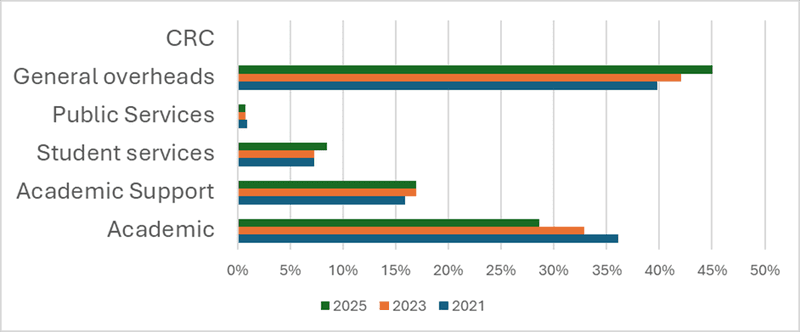
A relatively small proportion of professional staff worked in supporting students directly, with the largest group serving the organisation, and costed under ‘general overheads’.
Where professional staff work
Source: Liz Baré
The HE or HEW level system was now outdated and needed reform. Unskilled entry level jobs had largely disappeared, technology had changed the nature of roles, complex rules around classifications had been aligned with issues in underpayment of staff and spending on consultants was very high because universities felt they could not get the expertise they required in-house.
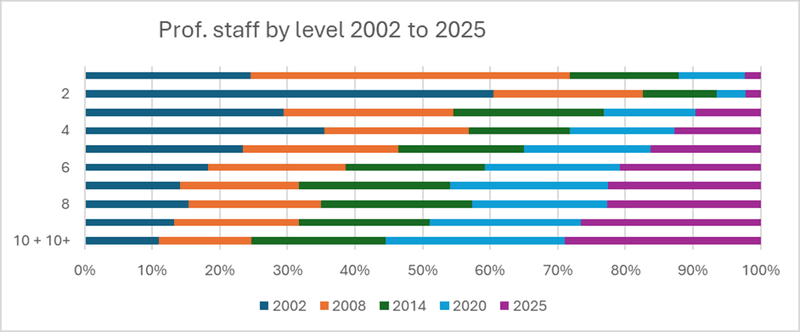
Ms Baré said it was time to revisit the 10 level classification structure. Professional staff work was getting more complex and expensive – as demonstrated by the significant growth in roles above level 6 in recent years.
“Despite regular reductions in professional staff, numbers regularly increase,” Ms Baré observed.
Professional Staff by Level, 2002-2025
Source: Liz Baré
“Is the 10 level classification structure fit for purpose? Does it reflect the work that needs to be done or limit how work is done?” she asked.
Watch Ms Baré’s speech to the HE People & Performance 2026 Conference. https://youtu.be/I1NJgrs2GT0