
Opinion
Part 2 of a 5 part series. In Part 1, Professor Richard Blythe writes that the public university was quietly taken from us — public in name only. In this piece, he identifies the barrier that betrays the nation's own ambition for it, and the body that was built to remove it but cannot.
By RICHARD BLYTHE
This month, in his first public conversation since taking the role, the Chief Commissioner of the new Australian Tertiary Education Commission, Barney Glover, sat down with Universities Australia and said something worth holding the government to.
He named the nation's ambition plainly. The Universities Accord — the review that created his Commission — set Australia a target: 80% of working-age Australians holding a tertiary qualification by 2050, which he called "an aspirational target for the nation, and one that we believe is necessary if Australia is to prosper." Reaching it, he said, means we must "uplift participation," and "bring those who have been disadvantaged" and lift "more students with an equity background" into the system.
And he named a funding failure standing in the way. Universities have been enrolling students above their funded caps and receiving only the student's contribution — no public subsidy at all. "The Accord made it clear we cannot partially fund or marginally fund something as vital to Australia's future," he said. "We've got to move the system towards full funding."
He is right about the ambition, and right that the funding is broken — but there are two different repairs here, and only one of them is moving. The first is that full-funding fix: converting those marginally-funded places into properly-funded ones. It mends a real, sector-wide failure, and it is underway. But it fixes the university's books. It does nothing about what the student pays.
The student's bill is the second repair — and it has been put on the slow track. Unwinding Job-Ready Graduates, the Commissioner says, must wait on a careful review of the true cost of teaching, with advice not due until the second half of 2027. Fair enough, as far as it goes. But while that review runs, the bill stands. Around 285,000 students in the worst-hit band keep paying it — around five billion dollars a year — for every year we take to decide.
And here is the part that should stop us: the student's share never needed to wait on the costing at all. That review sets what the Commonwealth should contribute. What the student pays is a separate dial the government could turn tomorrow, on stated principles, grandfathered so only new enrolments are touched. The delay is not a technical necessity. It is a choice to keep charging the failed rate while a different number is perfected — and to charge it, most heavily, to exactly the students the nation says it means to lift in.
The Government offers one other answer to the bill — "quicker, cheaper degrees," built by letting students bank a TAFE qualification and skip up to a year of university. But it cannot be honest in both directions at once. Either a year at TAFE is treated as equivalent to a year of university — denying the real difference between them, the confident application of known technique on one side, learning to interrogate, apply, and discover the unknown on the other — or it is not, in which case no time is saved and the honest path is longer, not shorter. Every version is a thinner degree or a longer road. And notice who is nudged down it: not the children of the comfortable, but the same students the bill already deters. It does not lower the bill. It moves the cost from dollars to rigour or time, and hands it, again, to the ones who can least afford any of the three.
That bill is the real barrier — and to see it, you have to look at who the public university has already carried.
Anthony Albanese was the first in his family to finish school; he put himself through a Bachelor of Economics at the University of Sydney. Tanya Plibersek, a plumber's daughter from the Sutherland Shire, did a communications degree at UTS. Jason Clare was first in his family too — arts and law at UNSW. Three of the most powerful people in the country, carried into public life by the public university.
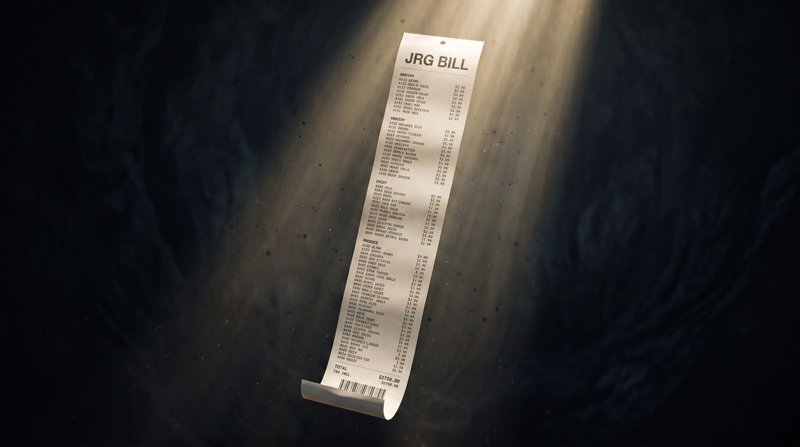
Read them their receipts. In Part 1 I called that $52,197 figure a receipt, and for a student staring down the cost it feels like one. But there is a sharper distinction hiding in the word. A receipt is proof of a transaction complete — and for these three, it is exactly that. They received what the public university gave, and the country paid the larger share to give it, because an educated citizen was understood to be worth more to the nation than they cost. That was the deal that made a plumber's daughter a senior cabinet Minister and a boy first in his family a Prime Minister. For them, the account is settled. That is a receipt.
Now turn the same three degrees around and face them forward, to the kid who hasn't started yet — and the receipt becomes something else. Not proof of what she received, but a demand made before she has received anything at all. That is not a receipt. It is a bill. Priced under the scheme this government has left in place, Albanese's economics degree now bills the student $52,197 and the country $3,948. Plibersek's communications degree: the same. Clare's law degree: more than $85,000 from the student, about $6,580 from the nation. These are not fringe courses. They are the exact degrees that made the Prime Minister and the Education Minister — now the most expensive band in the country, where the public has retreated to seven cents in the dollar and the student carries the rest.
That is the difference the whole argument turns on. The people who hold the receipt are handing the next generation the bill.
And look at what the bill is attached to: a set of government-owned pathways — into finance, into law, into politics, into journalism, into the arts — quietly priced so that they open most easily for those who can afford them. The state did not close these doors. It hung a price on them, and let the price do the sorting. Think about where those degrees lead: the professions, the public service, the newsroom, the Parliament. Put a fifty-to-eighty-five-thousand-dollar bill on those roads and you have not passed a law barring ordinary Australians from public and professional life. You have done the same work quietly, with a price, over a generation — and done it to the very pathways through which power renews itself.
This is the barrier the Commissioner's own ambition runs straight into. You cannot "uplift participation" and "bring those who have been disadvantaged" into the system while charging the disadvantaged the highest price in it to enter the fields that lead to influence. The two ambitions are at war, and the bill wins. And it is not the children of the comfortable who are turned back — they will pay it or never notice it. It is the students the price was always going to reach first: the poor, the regional, the first in the family, the ones the Accord says we must lift in. No one says these degrees are for the wealthy. The arithmetic says it for them.
Somewhere in Cabramatta or Camperdown or the Shire, right now, there is a kid who is what those three once were. When she wakes up tomorrow and begins, without quite knowing it, to cross options off her own list, no law will have stopped her. A number will. And the most expensive thing that number takes is not measured in dollars of debt — it is the participation the nation says it needs, and our next generation hope for, lost one deterred teenager at a time, and with her the doctors, the advocates, the writers and the leaders she might have become.
This is what it costs a nation to let its public university be quietly privatised without ever admitting it was — not a system replaced, but a public promise billed back, one student at a time, to the very people it was built for.
So the obvious question is: why doesn't the new commission simply fix it? This is the body the Accord created to steward the sector — surely this is its job. And here is the problem I take up next: it largely cannot. The minister, not the commission, sets the priorities that drive the system, in a statement Parliament cannot disallow — and the commission may advise on the student contribution, the very lever that sets the bill, only if the minister invites it to. The body built to open the door has been given everything except the key.
That is not an accident of drafting. It is the architecture — and it is where we go next.