
The increasingly powerful sector regulator, Tertiary Education Quality and Standards Agency (TEQSA), will reduce unnecessary administrative burden where appropriate over the next four years, but will also focus on enforcing compliance across a raft of areas.
The Agency has released its four-year plan addressing support for the universities that meet its standards – and consequences for those that don’t.
Improving governance standards, improving financial resilience, advancing sector harmonisation, assuring integrity amidst rapid technological and geopolitical change and responding to identified issues with student safety are among TEQSA’s key focus areas.
The strategy is important, given the Government’s repeated references to the importance of giving TEQSA more power, as well as an additional 14 staff and $2.7m from a university levy this financial year – with the strategy hinting at how the Agency will spend it.
For 2026-27, TEQSA sets out 16 tasks across four objectives: supporting sector self-assurance; responding to risks, ensuring compliance and oversight and management of enterprise risk.
Some of the tasks are anodyne, such as, “ensure regulatory assessments are streamlined and coordinated to ensure regulatory activity is undertaken efficiently.” Some are self-serving, “recover regulatory costs consistent with Cost Recovery Implementation Statement and relevant framework or guidelines.”
But others set out how the Agency can intervene in HE operations; for example;
- “Maintain a risk assessment focus on the financial viability of providers, particularly in relation to providers heavily reliant on overseas students,” and;
- “Further develop the activity of the TEQSA Higher Education Integrity Unit in relation to commercial academic cheating, cyber security and foreign interference.”
And then there is the clause that may mean the Agency does not have to go through the motions of asking a provider to agree to an intervention, as per ANU. TEQSA will, “monitor the performance of registered providers, identify risks, assess provider responses and, where necessary, take regulatory or other action.”
And just in case anybody has missed why TEQSA needs to get involved, the agency explains. “University leadership and governance arrangements have come under increased public scrutiny, including governing body accountability and transparency, workplace law compliance, institutional culture and internal quality assurance.
“The final report of the Senate inquiry into the quality of governance at higher education providers, released in December 2025, made several recommendations regarding the appropriateness of TEQSA’s powers to bolster accountability and transparency across the sector.”
Comment: Tim Winkler
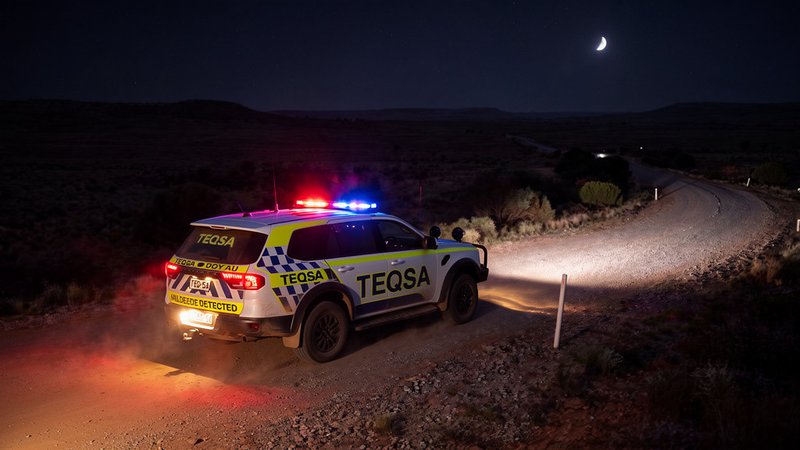
TEQSA is in the process of morphing from a oft-overlooked detective working in the background to Education Minister Jason Clare’s Frontier Patrol team, with more people, more power and as many lights and sirens as they can muster.
There is political mileage in showing up the many missteps of the Tertiary Sector, at a time when the stench of Job Ready Graduates and the political albatross of immigration control both mean that the Albanese Government needs to demonstrate it is cleaning up the sector – which helps keep HE leaders on the backfoot at a time of massive regulatory change and funding woe.
That doesn’t mean that the bigger shadow cast by TEQSA’s big stick should not be welcomed. By forcing the Government’s hand, the regulator is being given real power to address failures of governance, performance or leadership that have festered for far too long.
But TEQSA has an extremely difficult tightrope to navigate, attempting to keep an even keel on the scales of justice while navigating new territory. The leadership, knowledge and engagement of Chief Commissioner Kerri-Lee Krause has been critical to the success of the Agency thus far. The challenge is bringing more than 100 other staff along on the journey.
One of the challenges TEQSA faces is knowing when to ask for help. There should not be a marketing leader in the entire sector that doesn’t recognise the fallibility of their education performance measures, which are mission critical if the sector is to steward, rather than just punish.
Counting website traffic is like counting fairy floss as a food group. Any dodgy online casino hacker could boost TEQSA’s web hits way more than the 10% required without a single relevant eyeball touching the site, and zero understanding of the agency’s engagement and impact. Instead TEQSA should be hiding its web traffic metric in a drawer somewhere and focusing on market research insights and user analysis.