
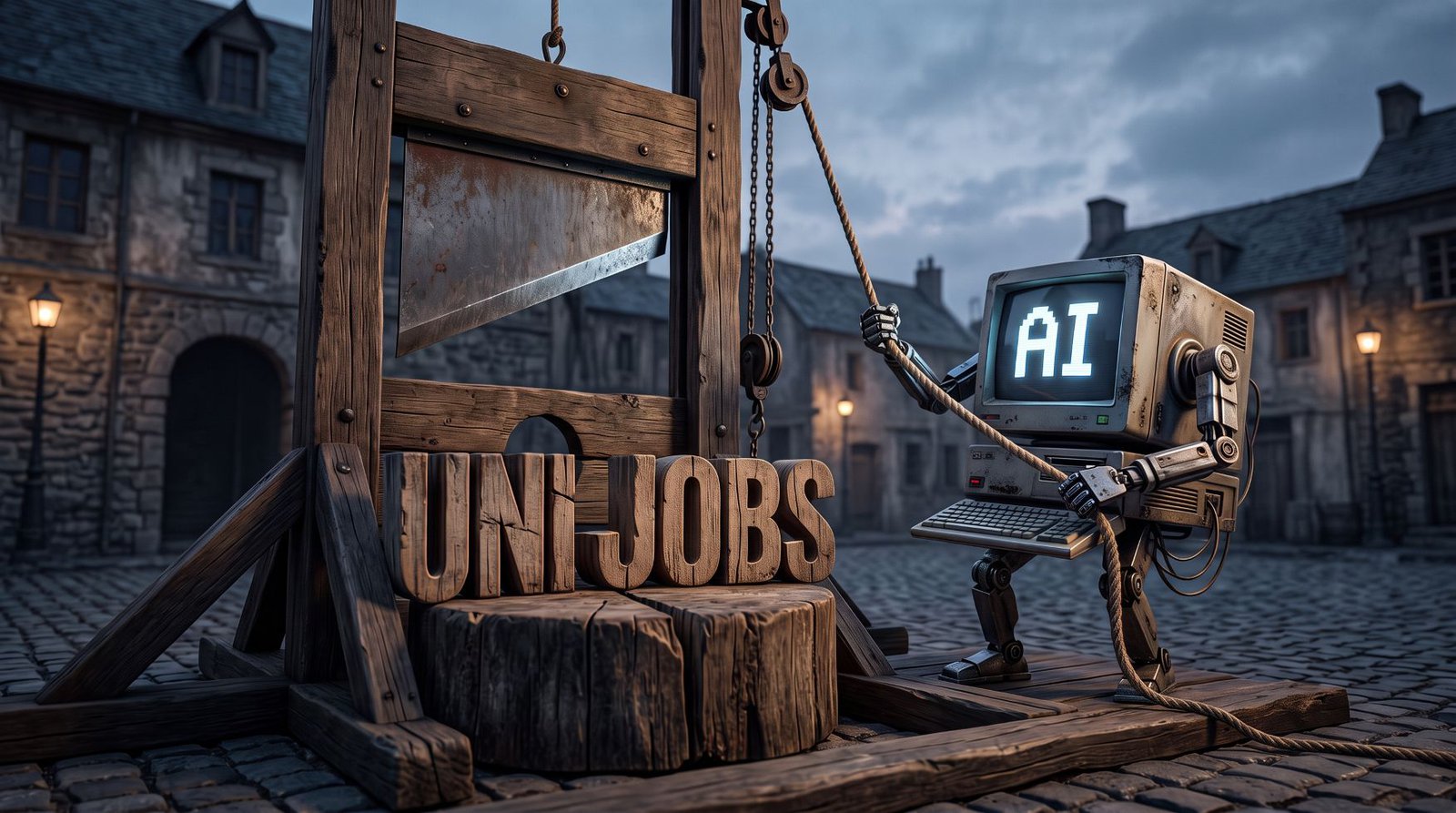
What AI will do to jobs in universities sounds like a big industrial issue. It’s not – across the public system nobody much seems all that bothered, at least for now.
Last week, National Tertiary Education Union members at Uni Sydney went out for a day, with artificial intelligence the headline issue. In fact, it was routine industrial action as part of enterprise bargaining, but community fears of the impact of artificial intelligence on employment across the economy made for good media coverage. “AI jobs war erupts at Sydney university as staff walk out,” the Sydney Morning Herald headlined. Just not that many of them; union-friendly sources estimate 2,000 or so people went on strike from of around 10,000 staff, (only union members could go out.)
Certainly the union’s leadership rates AI as a big issue, including it in the national log of claims template for bargaining in the present Round Nine of enterprise agreements, now underway across the country. And outgoing national secretary Damian Cahill has always rated it as a big issue for his members. “AI is already capable of performing large parts of the academic labour process, albeit imperfectly, including curriculum design, marking and class preparation,” he warns.
But cadres at campuses across the country don’t seem that much fussed. Nor, it seems, do managements, which are much more focused on defending the credibility of their business model from students cheating. There is not much obvious going on among managements to use AI to cut costs.
Certainly it is on the table in bargaining now underway at 16 universities, but at these local levels, neither side is going too hard. The first Adelaide U agreement, yet to be signed off by the Fair Work Commission, covers AI under major organisational workplace change. As it seems do in the Uni Newcastle agreements, as AI does not get a mention in the headline EAs. The Western Sydney U agreements, approved by the Fair Work Commission Friday, states the “university will provide appropriate training and support to employees affected by the implementation of AI system” and requires management to take “employee views about the anticipated impact of the proposed system into account prior to making a decision to implement the system.”
So far, the NTEU at Uni Sydney wants “protections against unregulated AI,” in the next agreement – management is expected to propose placing them in policies, which they can control and change without union agreement.
Overall, however, veteran observers of the bargaining process suggest it is too early, and too complicated for AI to be a big IR issue now. The focus on student cheating diverts attention from using it to reduce teaching numbers. And after years of criticism for being elite and out of touch, no Vice-Chancellor wants to risk the fate of Iain Martin (ex VC Deakin U) or Genevieve Bell (ANU) by upsetting staff with proposed job cuts.
But, one adds, what is not adopted in Round Nine of bargaining will be in place before Round Ten bargaining begins in three years. “Tech works faster than the Fair Work Commission.”