
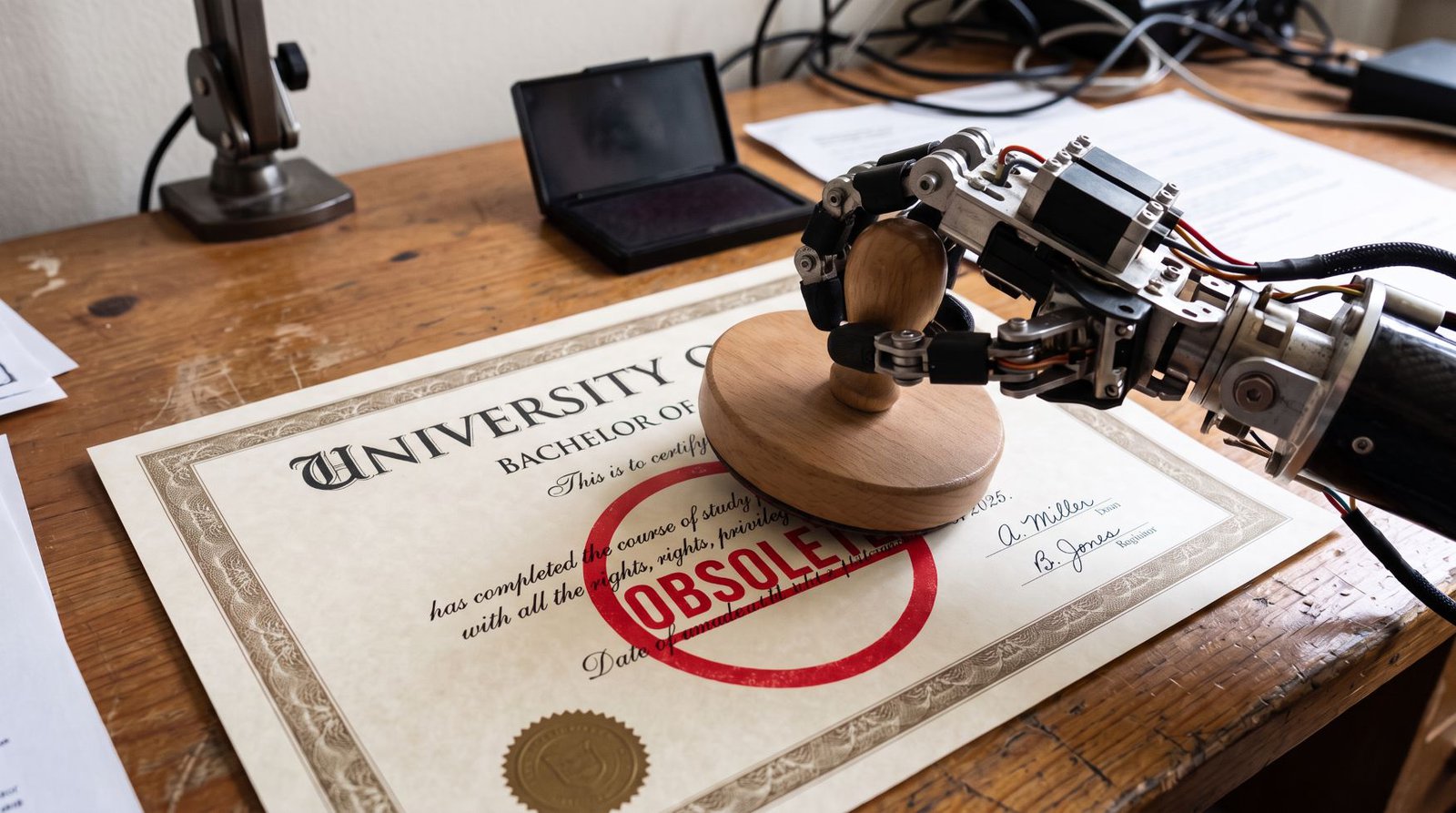
As an increasing number of Australians turn to AI for answers, Future Campus has found that the course selection advice on offer from major AI platforms is out of tune with sector experts.
In the same week that Universities Australia CEO Luke Sheehy told a humanities deans conference that humanities degrees delivered many of the skills of critical thinking, communication and judgement that would be critical as AI replaced more mundane work in the knowledge economy, Chat GPT, Copilot and Claude are offering some very different advice.
“A BA is worth it if you pair it with the right majors + practical experience. it is not worth it if you treat it as a general ‘exploration’ degree without building a clear skill pathway,” was the advice of Microsoft’s Copilot, when asked whether a Bachelor of Arts was worth doing.
Each platform offers some similar themes, saying that degrees are less important than they used to be and need to be paired with other things (work experience, other qualifications) to make a graduate more successful in job hunting.
“The biggest risk may actually be choosing a degree that’s too generic,” ChatGPT says, when asked whether degrees will be obsolete by 2036.
The advice that LLMs provide is becoming increasingly influential in the decision making of prospective students around the world – headlining the search response in Google and instantly to hand when consulting platforms such as ChatGPT – as Australians do more than 19 million times per month according to Visrank.
Not Cutting Through
There is sound logic in Mr Sheehy’s proposition that a BA could equip graduates with exactly the skills they need for the future.
“We say the future workforce needs people who can think critically, communicate, understand human behaviour, navigate cultural difference, interrogate information and exercise judgment in a world awash with AI-generated content,” Mr Sheehy said.
But that perspective is not cutting through to LLMs; which are having increasing influence over decision making.
This is a critical problem for the sector, not just for Arts Faculty Deans. In the UK, 48% of students consulted AI in choosing their university, according to a recent UCAS report. While 58% said AI provided helpful information only 10% said they trusted AI to make their decisions. US research by EAB returned similar figures. IDP last year reported that more than 50% of Chinese students they surveyed would use ChatGPT to help them choose their course and study destination.
58% of Australians aged 14+ used AI during March 2026, according to a Roy Morgan poll and research by Western Sydney, University of Canberra and QUT researchers showed that more than a third of young Australians relied on Gen AI as a source of news. Consumer research indicated 43% of respondents consulted AI when shopping.
Who is fixing it?
A new brochure won’t solve the problem – and nor will a sophisticated search engine optimisation strategy. SEO is rapidly being replaced by AIO – Artificial Intelligence Optimisation, a dark art which has not yet prevailed with a completely successful solution.
This is just one of the dimensions of the sector’s relationship with AI which is having a seismic impact on social acceptance and respect for universities – but new solutions are on the horizon.