
Opinion
It’s very useful to be able to distinguish between scandals and crises.
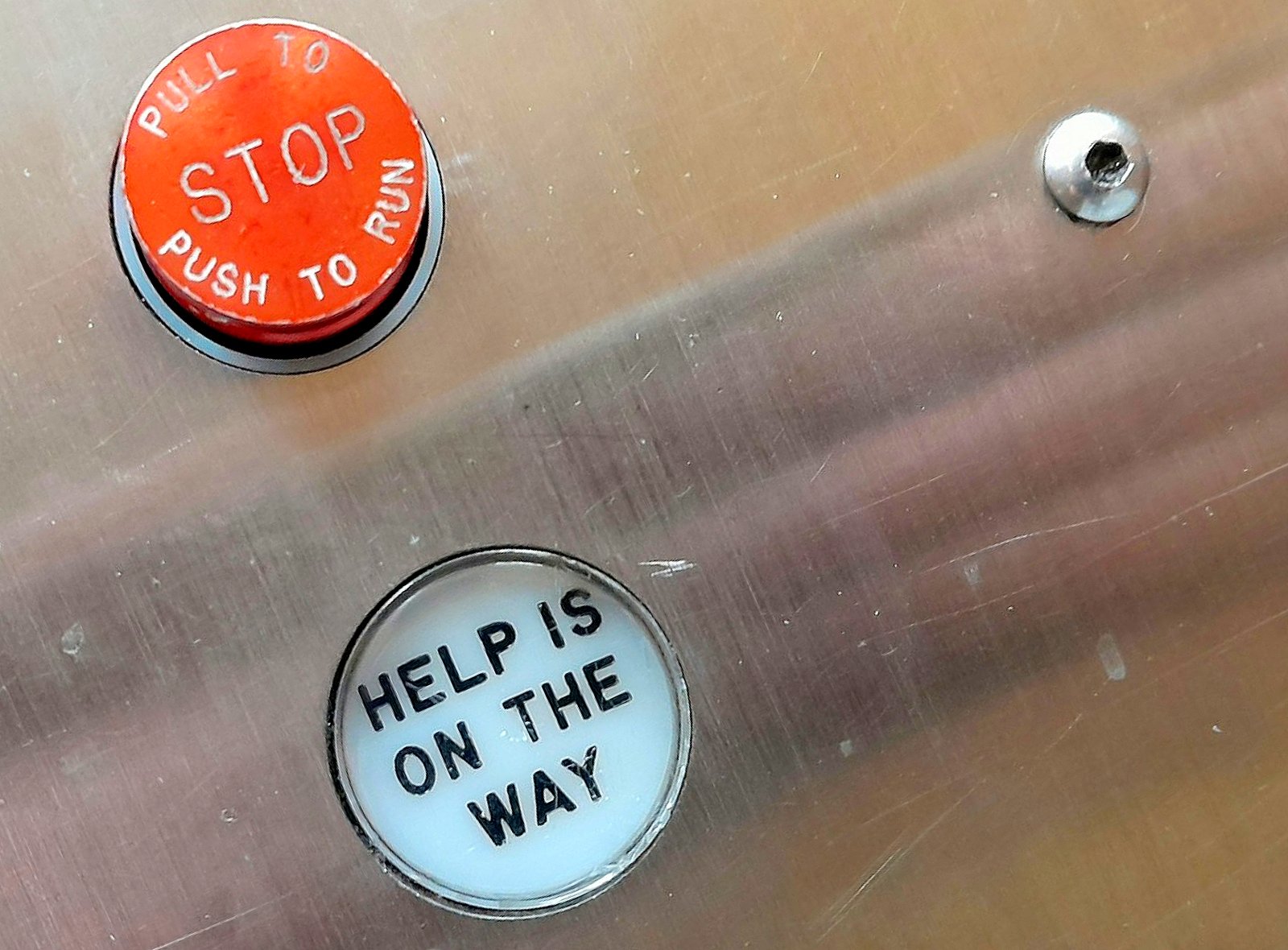
Scandals shock us. They highlight a gap between what was promised and what was delivered. But they are seldom of much consequence, unless they are symptomatic of underlying crises. Crises occur when something threatens our core. Crises can progress from bad to worse. They deserve immediate attention.
It is easy to think of examples of scandals and crises.
The cricket cheating saga, ‘sandpaper-gate’, is a scandal. Cricket, of all sports, has presented itself as being about ‘fair play’, so ball-tampering is simply ‘not cricket’. A scandal like this, especially when there is a gap between each player’s testimony, sells newspapers.
Scandals are not always just about fairness. Some cost lives.
The mushroom poisoning trial became a newsworthy scandal because of the striking gap between the protestations of innocence, and the mounting evidence of guilt. The Theranos fraud case involving Elizabeth Holmes, the subject of the film ‘You Can See Everything’, has become a celebrated scandal because of the gap between what she says and what she has done.
People enjoy scandals. They reassure us that no one is perfect. They provide an opportunity for heartfelt outrage, and feelings of superiority and schadenfreude. Exchanging information on scandals is much more satisfying than gossiping about the weather.
None of the above scandals, however, represents a crisis.
It is safe to eat beef wellington.
Crises are different.
Climate change is a slowly unfolding crisis. It is altering habitats and driving species to extinction. Extreme weather events across the globe disrupt food production and add to costs of living. Heatwaves, floods, and collapsing glaciers are lethal. Attempts by governments to electrify our energy systems should be supported.
Sadly, slow crises attract less attention than sudden scandals.
The fragility of the internet is another looming crisis. As our reliance on computers has increased the magnitude of this problem is being appreciated. AI is exposing vulnerabilities in systems that are then rapidly patched, sometimes creating further glitches. This could be a very serious crisis.
Many believe that universities are in crisis too.
David Runciman, a political philosopher and gifted podcaster, has just run a series entitled ‘Can universities survive?’. This is not his best work. His guests struggle to identify what a university is for.
To me the answer is simple and if you understand it, it becomes clear that universities will survive.
To me universities are all about learning. Students learn from teachers, and teachers and students learn by doing research. This learning has many benefits. Learning transforms people, and the common interests that develop bind people together into communities with shared values and purpose. Happily, learning also pays off in terms of discoveries and new gadgets that create material value for society.
More prosaically, universities impart skills and knowledge, provide credentials that signal capability and stamina, and they grade graduates on their achievements.
Most importantly, however, universities play a useful role in the human life cycle. Universities serve as ‘sorting hats’ providing opportunities for students to find out what they like and who they like. They enable young people to fledge the family nest and to move towards building their own separate families and friendship groups. At best universities draw people into nourishing patterns of lifelong learning, leaving less time for superficial scandals and gossip.
Universities will survive because all these things are useful.
But what about all the scandals and crises at universities?
Many universities are experiencing challenges related to financial stress. Some universities are seeing enrolments plateauing and some are becoming smaller. This means they cannot rely on economies of scale to manage rising costs. But getting smaller is not fatal. There may even be benefits.
Australian universities have enjoyed decades of growth. A hundred years ago a tiny percentage of young people went to university, but now up to 50% of school leavers do. In addition, students have arrived from overseas. This growth has provided huge opportunities to build and improve institutions. But we are now probably approaching ‘peak student’ numbers.
Perhaps 50% of school leavers progressing to university is a natural peak. Perhaps those who see themselves as being in the top half of the class may wish to stay in conventional education. Others may want a break. Lifelong learning, and the addition of technical education is important for maintaining opportunities and I applaud the Universities Accord’s ambition of having 80% or more of our citizens benefiting from higher education (either academic or more technical and vocational), but it isn’t clear that there is sufficient demand to reach those targets. Nevertheless, I like high targets as they ensure that we keep our doors wide open. It is important that we signal that everyone is welcome.
Many people fear that AI will now accentuate crises facing universities. I think a lot of institutions will remain strong, especially those associated with a genuine sense of place, with a physical locality. The transformational nature of learning together is less vulnerable to AI. Supervised on-campus assessments can be constructed to minimise AI cheating. But unfortunately, I do worry that online learning may face a crisis. Online learning is important for accessibility, but more work and perhaps technological fixes will be required to maintain the reputation of online degrees. A lot of people are working hard to get fixes in place and to ensure that online degrees remain respected despite the threat of AI-mediated cheating.
In the modern media age we seem to be drowning in scandals, but most scandals are a distraction. We need to identify the genuine crises and work together to counter them. Some solutions will be obvious, but others will be more complicated. Having a large proportion of people trained in and dedicated to deep learning is a great start when it comes to trying to address any imaginable crisis. This is another of the great advantage of having universities.
Professor Merlin Crossley is Deputy Vice-Chancellor Academic Quality at UNSW