
Opinion
Tim Winkler is right that the equity conversation is being held in the wrong room.
His point, that the recent ACSES Equity Insights Report will be read by almost none of the students it describes, cuts to the heart of a sector which will spend years talking about the doors of opportunity, but do little in the way of thinking about where they lead.
Who is allowed through them. Whose postcode, ATAR or bank balance keeps them locked out.
Professor George Williams wants to open the doors of opportunity. Professor Adam Shoemaker wants first-in-family learners counted among the people we usher in. Professor Taryn Jones and Professor Rorden Wilkinson want us to understand the lives students actually lead once they arrive.
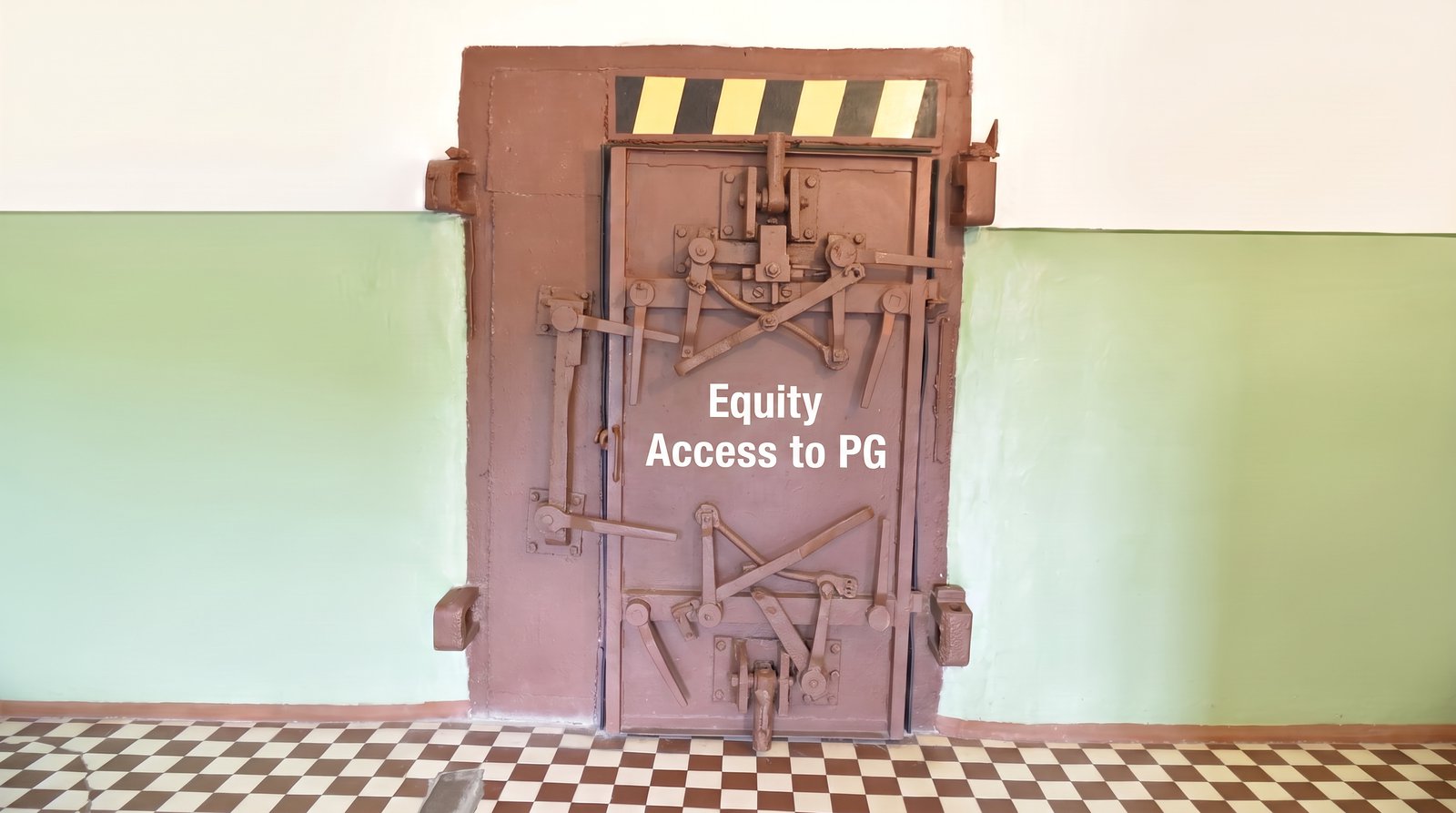
They are all correctly describing that a barrier to higher education is the door. What the conversation has failed to describe, is where that door leads to.
We have been candid that the Accord’s target for 80% of working-age Australians holding a tertiary qualification by 2050 measures education as a KPI, not a journey. An Australian who finishes a bachelor’s degree is counted towards the 2050 target, but if they go further in higher education, they are not. The number does not care if they become a leader, researcher, a specialist or a clinician – it was satisfied the day they were handed a piece of paper with some gold lettering.
The managed growth system caps Commonwealth-Supported Places and pours $3.6 billion of needs-based funding into commencing undergraduates from the regions and the outer suburbs. That is a good thing. But it falls into the same mistake of approaching higher education as a one-step process that simply requires walking through the door. Postgraduate coursework remains mostly full-fee. Research places are shrinking.
Since when did we decide that disadvantage ends when you hang up a picture frame with a printed signature and words ‘Bachelor’ on it?
Combine a target that counts only the first qualification with a subsidy that funds only the first qualification, and undergraduate study becomes the dead end we allow for the disadvantaged. The rest of the journey – i.e., postgraduate study – becomes bricked away increasingly for the advantaged. Professor Williams warns of a two-track system in which the advantaged graduate into good jobs while the disadvantaged miss out. We couldn’t agree more.
The deeper risk is not just a two track system, it is that a system built on a flat participation number leads to a nation with a flat-skills problem. In the UK, Tony Blair set a target of getting half of young people into higher education and met it – now the UK is debating graduate debt and reduced mobility.
So Winkler is right that we must expand the base, and Professor Williams is right that the domestic pool has been stagnant for years. The question is not whether this goal is worth pursuing, it is whether it should be the goal. The purpose of the 80% target was never a nation of bachelor’s degrees – it was for opportunity to not be decided by your postcode or background.
Part-time study is a crucial component of higher education in 2026. Nearly half a million students study part-time, and their number has grown by a fifth in a decade. Yet the system rarely designs its policies, timetables, its funding and its stipends around a mum re-training or upskilling whilst raising her kids and working.
Disadvantaged Australians undertaking postgraduate study do it part-time, around a job, a child, a parent, a disability or chronic illness. The ACSES report on part-time students, released last month, found that part-time enrolment intersects with every one of the Commonwealth’s priority equity groups, that 65% of postgraduate coursework students study part-time, and that part-time enrolment is the single strongest predictor of a postgraduate dropping out.
Moreover, disadvantaged Australians undertaking a part-time PhD are paid roughly half a stipend and then, unlike a full-time candidate, are taxed – stripping $1,854 a year from around 6,985 candidates – most of them women. We have designed a system that pushes the disadvantaged to study part-time, then taxes them for it.
Frank Larkins’ recent analysis shows domestic research student numbers fell by 15% between 2015 and 2024, while international enrolments rose 33%. Every Group of Eight university now trains fewer domestic researchers than it did a decade ago, and the domestic share dropped from 68 to 58%.
Need we point out the obvious: the sovereign research base is thinning when the Government’s Future Made in Australia program calls for domestic capability, including getting more women into STEM – who study research degrees part-time at higher rates than men.
The candidates we tax out of part-time research are those very women we need.
Supporting disadvantaged Australians through the full course of study, evolves the 80% target from a KPI into a skills strategy. It happens to solve three other national problems at once: our pending flat-skills trap, the collapse in domestic research training, and the women-in-STEM gap we are all saying we need to close.
We need to sit down with the students this involves: working, caring, disabled or chronically ill, first-in-family, part-time, rather than solely the imaginary school-leaver from the leafy suburbs we are used to. We need to count postgraduate attainment in the 2050 target, and let needs-based funding follow the student through the first door and into the rooms beyond. And stop taxing the stipends of the part-time researchers we say we want.
Jesse Gardner-Russell is the National President of the Council of Australian Postgraduate Associations (CAPA), and PhD candidate in Ophthalmology at The University of Melbourne.
Gemma Lucy Smart is the CAPA Board Chair and a PhD candidate in history and philosophy at The University of Sydney.