
The new Quality Indicators for Learning and Teaching (QILT) graduate outcomes survey is out. It makes the continuing case for study – unless of course it also reflects the character and qualities of young Australians.
The new survey, of 2023 grads taken this year, demonstrates the way they transition into the world of work.
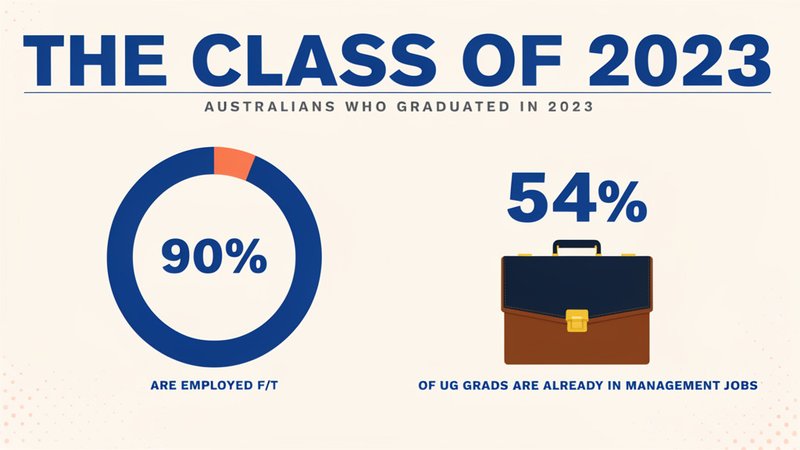
While 80% of people with an UG degree were in jobs six months after completing study in ’23, 90% were this year (although this might have something to do with a methodology change.)
Underemployment reduced; over half survey responders who were not in FT work after graduating were, three years later. Plus, while a quarter were still not using all their skills at work after three years, the most common response was they were happy in the job they had.
“This suggests that not fully utilising skills and knowledge acquired in a course does not necessarily indicate an unsuccessful outcome for graduates,” QILT comments.
And over time, grads work things out, with “a considerable proportion” of those who do not start in jobs that suit their skills and qualifications finding employment that “which suit their preferences.” Mostly in management, which QILT calls, “a proxy measure for skills utilisation.” By this year, 54% of 2023 UG completers were in management jobs, 63% for coursework PGs.
Overall, people with any degree are deemed employable. The 2026 FT employment rate for 2023 grads was above 90% for all study areas and those that were not, were close; comms (88%) HASS 89%. The unsurprising last place was creative arts (78%).
And that is regardless of where they studied. The 2026 FT employment rate for all public unis clusters around the middle 90% average.
Universities Australia was quick to claim credit for its members, saying the survey scores demonstrate “universities are delivering strong outcomes for graduates and the nation.”
Unless of course, qualifications signal the perseverance and innate ability grads have, wherever and whatever they study.