
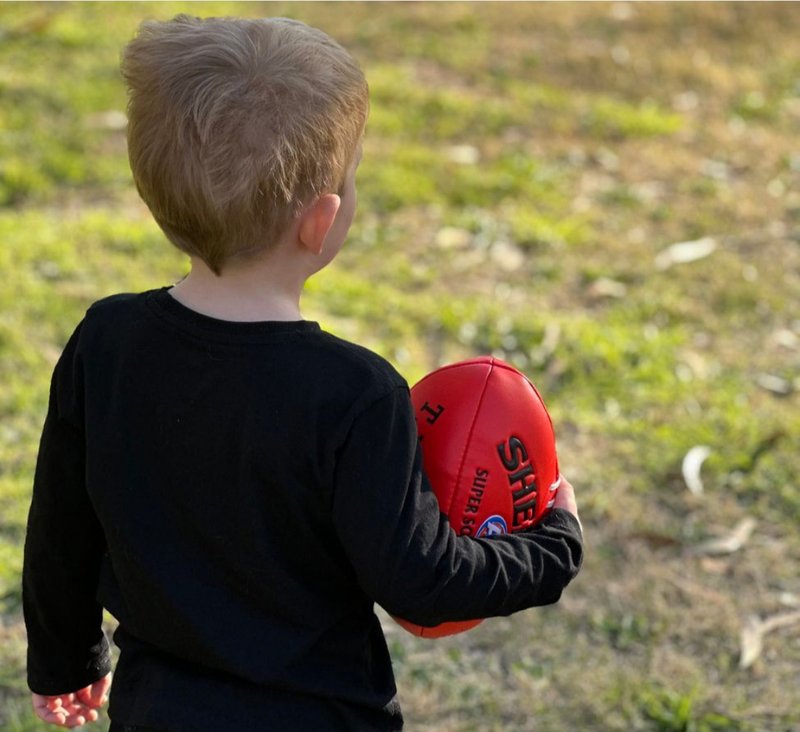
Uni Tasmania is announced as the Official Higher Education Partner of the Tasmania Devils AFL team, due to start playing in ’28. Hopefully the university got a good price – what with it having no local competition in the sponsorship category.
***
Opponents of the WA uni merger are already writing it off, suggesting the Libs, Nats and PHONsters in the Legislative Council will knock it back.
That would take their lining-up with academics and their union who oppose the change. And it could happen if the case is made that a reason for the merger is to fix a non-existent problem – that WA is underperforming on research.
It isn’t. As Keigh Houghton and Christine Jubb explain in FC, WA universities are actually nation-leaders. They point to their research showing that the four public unis outperform averages in all other states for productivity and “overall value for money.” Plus Uni WA leads the Group of Eight on research output per EFT staffer. And Curtin U has been (just) ahead of all public universities outside the state since 2016 for research publications by their academics.
When former state Chief Scientist Peter Klinken started the merger campaign five years ago, he made the case that WA needed a higher place on the international rankings to attract more international students, whose fees in turn would fund more research. Turns out the state is doing ok on research output and now increasing international enrolments is not popular with any party.
International Education Minister Tony Buti needs some more popular, and populist reasons for his merger. And he needs to pitch them direct to the voters, because if it comes to an argument on numbers with the academic establishment he will lose.
***
Uni Melbourne’s School of Population and Global Health, is being renamed the Melbourne School of Public Health. Apparently, it is important because the name change “shows we stand behind what we do.” At least they are not announcing new marketing.
***
Science and Technology Australia and MetaMelb (Uni Melbourne) have surveyed researchers on their use of Gen AI. They mostly use it moderately but aren’t enthused.
Over 80 per cent of responders across all disciplines had ethical/accuracy concerns and the most acceptable AI task was editing drafts of funding applications. And most were not comfortable with capitalists. 82 per cent were concerned about copyright. 74 per cent were worried about energy consumption and 58 per cent did not like AI coming from the private sector. Just 10 per cent agreed they would consider using discounted capacity from a commercial provider.
The joint parliamentary committee on AI must have read the research community’s mind. Last week the committee told the prime minister the government should use NCRIS to, “meet national research needs that cannot be met by LLM training data centres,” (FC HERE).
***
The National Tertiary Education Union wants people to protest the fifth anniversary of Job Ready Graduates by sending Jason Clare a postcard demanding its abolition. Given the Greens did not get JRG abolished in return for passing the government’s new student funding model, can’t hurt.
Perhaps people could add their own message to the card, asking when will ATEC assistant commissioner Stephen Duckett’s new costing model for teaching be released? Word is he has filed.
***
Back at start of September the Tertiary Education Quality and Standards Agency ordered the Australian National University to propose an independent expert/experts “to undertake a 'Governance and Council Strengthening Programme' with the ANU and its Council” including “a financial stability plan.” The university had 30 days to submit. So with the deadline long passed, how’s that going?” FC asked ANU, which replied it is “progressing the engagement of that expert” as per TEQSA’s requirements and ANU procurement policies. And yes, the regulator has approved the university’s un-named nominee. There is no date for an announcement but whoever it is will be around during the next VC’s term. Chancellor Gordon de Breuwer tells staff that will start in March. The TBA reviewer’s brief runs for two years.
Maybe we will learn more when ANU representatives appear next Thursday at Senate Supplementary Estimates – at 8pm. And no, that’s not the graveyard session – TEQSA follows at 9pm and the ARC at 9.30pm.
***
Data analytics provider Clarivate announces the end of its Research Professional News – the cyber presses cease to roll at year end. “The challenges in sustaining a specialist journalism offering in today’s environment are significant and the closure reflects those longer-term realities,” RPN announces. Sadly there are no add pars on what these regrettable realities actually are.
***
There is not a Vice-Chancellor in the country paid less than ATEC Chief Commissioner Barney Glover, who struggles along on $502,000, as released to Parliament by Jason Clare. This is around half what he made as VC of Western Sydney U, but in that job he did not get to oversee every VC in the country.
***
The National Student Ombudsman slams UTS for its handling of Jewish student complaints of their concerns with a pro-Palestine protest in March ’25.
As in really slams. “Despite noting the serious nature of the complaints and escalating complaint handling to the executive, we found that the University failed to follow its complaints policy and procedure and did not respond productively to student feedback, thereby missing an important opportunity. Some Jewish students did not receive a response at all to their complaints about the behaviour at the protest. Those who did receive a response received generic responses that did not address their specific concerns.”
The NSO sets out seven recommendations on how all universities should handle student complaints.