Underrepresented cohorts of students highlighted as a priority for recruitment in the Accord have declined between 2021 and 2024, according to a new report card from the Australian Centre for Student Equity and Success (ACSES).
Students from low SES and regional and remote areas experienced the biggest drop – with a 9-10% decline compared to the sector overall, the report said. It is an unwelcome report card result for Education Minister Jason Clare, as he works to build confidence in progress towards the Accord target of 80% of the Australian workforce having a qualification by 2050.
“Looking ahead, reversing the overall decline in enrolments will be important, but it will not be enough on its own,” the report says.
“Future growth will need to be actively directed towards underrepresented groups, particularly students from low SES and regional and remote backgrounds, who have experienced the largest declines.
“Without this focus, progress towards equity parity by 2050 is likely to slow further, and for some groups the gap may continue to widen. In addition, it is important to consider other performance measures such as retention and attainment, as gains in enrolment need to be matched by successful progression and completion, to support meaningful equity outcomes.”
Domestic enrolments fell by almost 56,000 students between 2021 and 2024, with success in growing equity cohorts variable between different institutions. The University of Sydney performed best, and was the only university to grow equity participation across each equity grouping (regional and remote, Indigenous, disability, low SES).
Students with disability was the only cohort to increase above trend and First Nations student participation appears to be on target, despite a small decline over the study period, the authors said.
Education Minister Jason Clare released forecast figures indicating that domestic enrolments had grown over the past year two weeks ago, based on preliminary departmental data, but is likely to face more questions this week over progress towards Accord targets and the accuracy of claims of growth when Parliament resumes this week.
Meantime, equity is also an issue in the international sphere.
If the sector seeks to attract the best students rather than the richest as part of its commitment to international education, then international equity also appears to be in decline, with increased visa application and tuition costs combined with selective visa slowdowns shutting out tens of thousands of applicants, as the Government seeks to reduce international student numbers, Stephen Matchett reports.
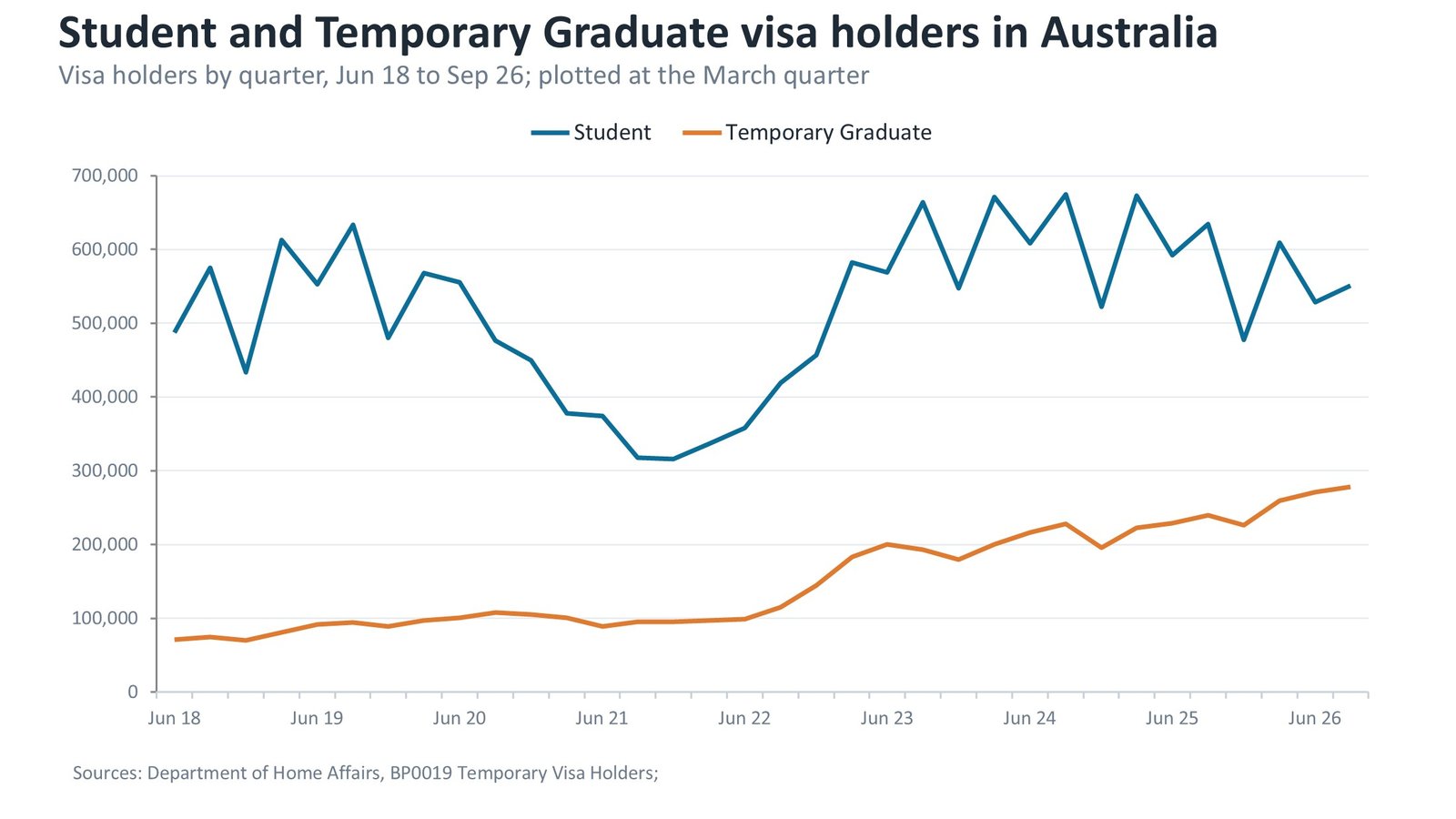
While international student visa numbers for September are the lowest since 2017 (COVID years excluded), temporary graduate visas have increased from around 71,000 to 277,000 over the same period, as shown in the chart below.